D
Dashboard
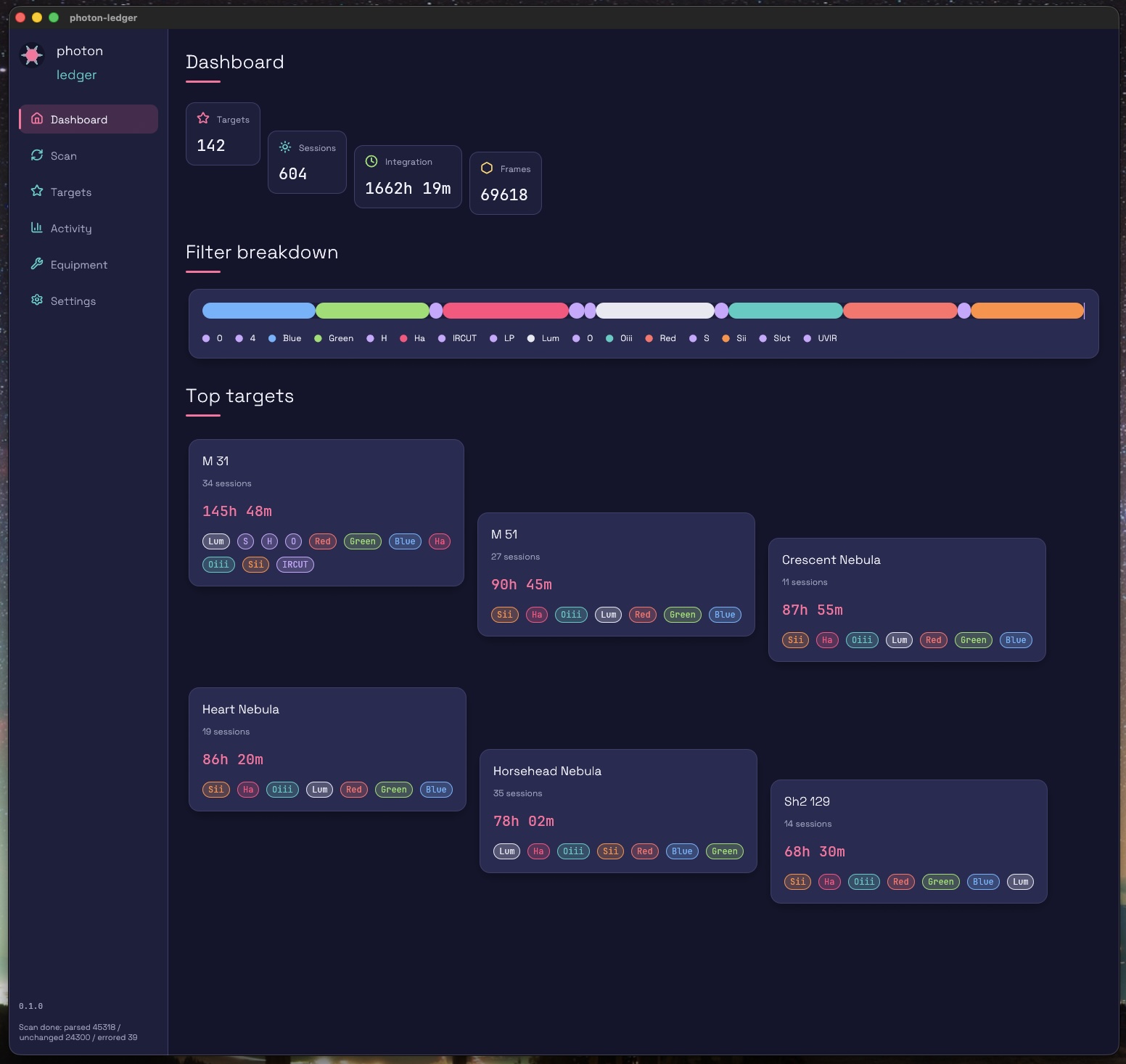
Targets, integration time, sessions, equipment — at a glance. The starting point.
FITS archive ledger for astrophotographers
Photon Ledger reads every FITS header in your archive — headers only, never pixel data — and turns it into integration time, per target, per filter, per scope, per location, per session.
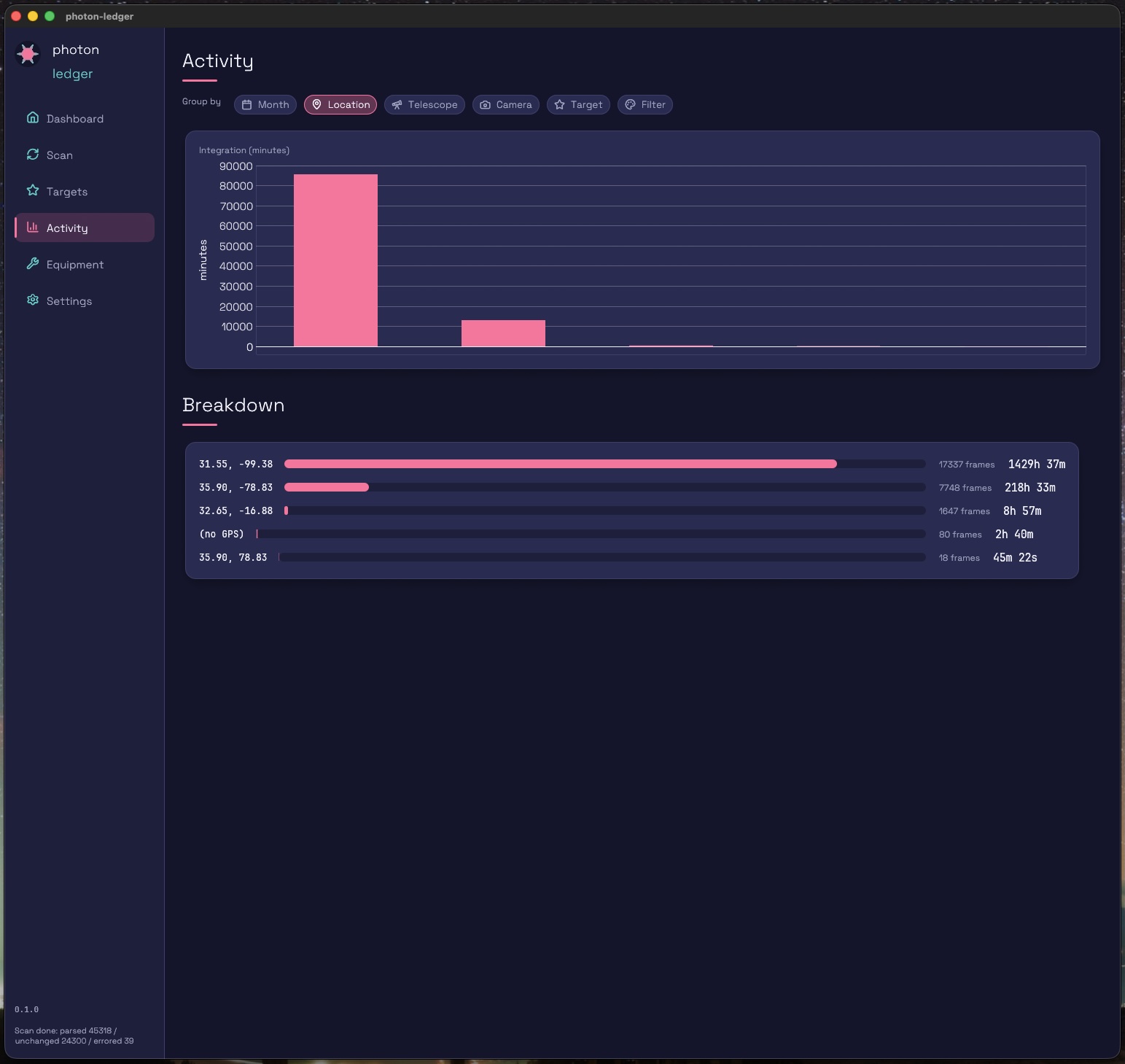
What one user catalogued in their first scan.
What's in the box
Every tab in the app maps to a question you've been asking your file system the hard way.
Targets, integration time, sessions, equipment — at a glance. The starting point.
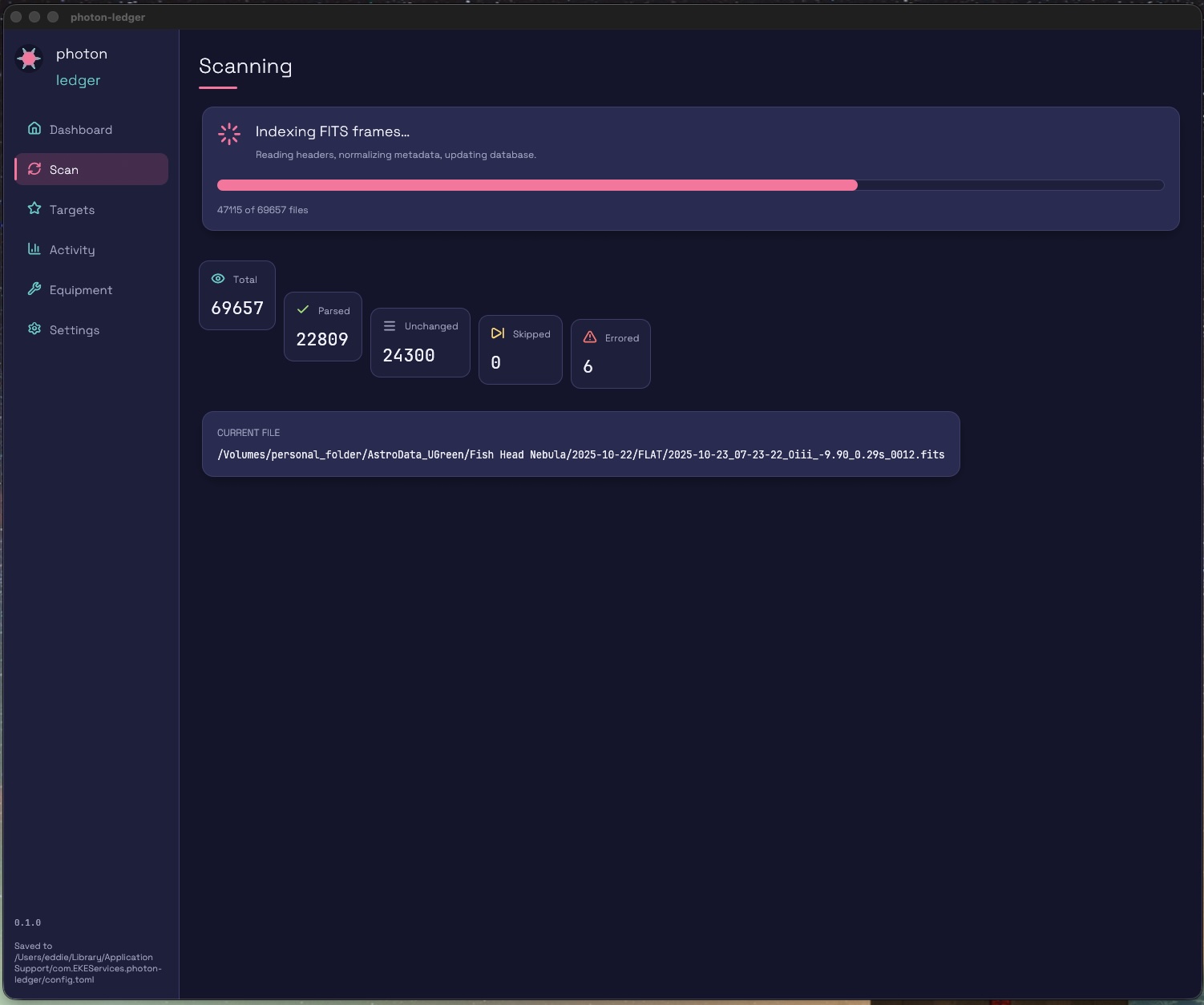
Index 60,000+ frames in minutes. Headers only — your pixel data never moves.
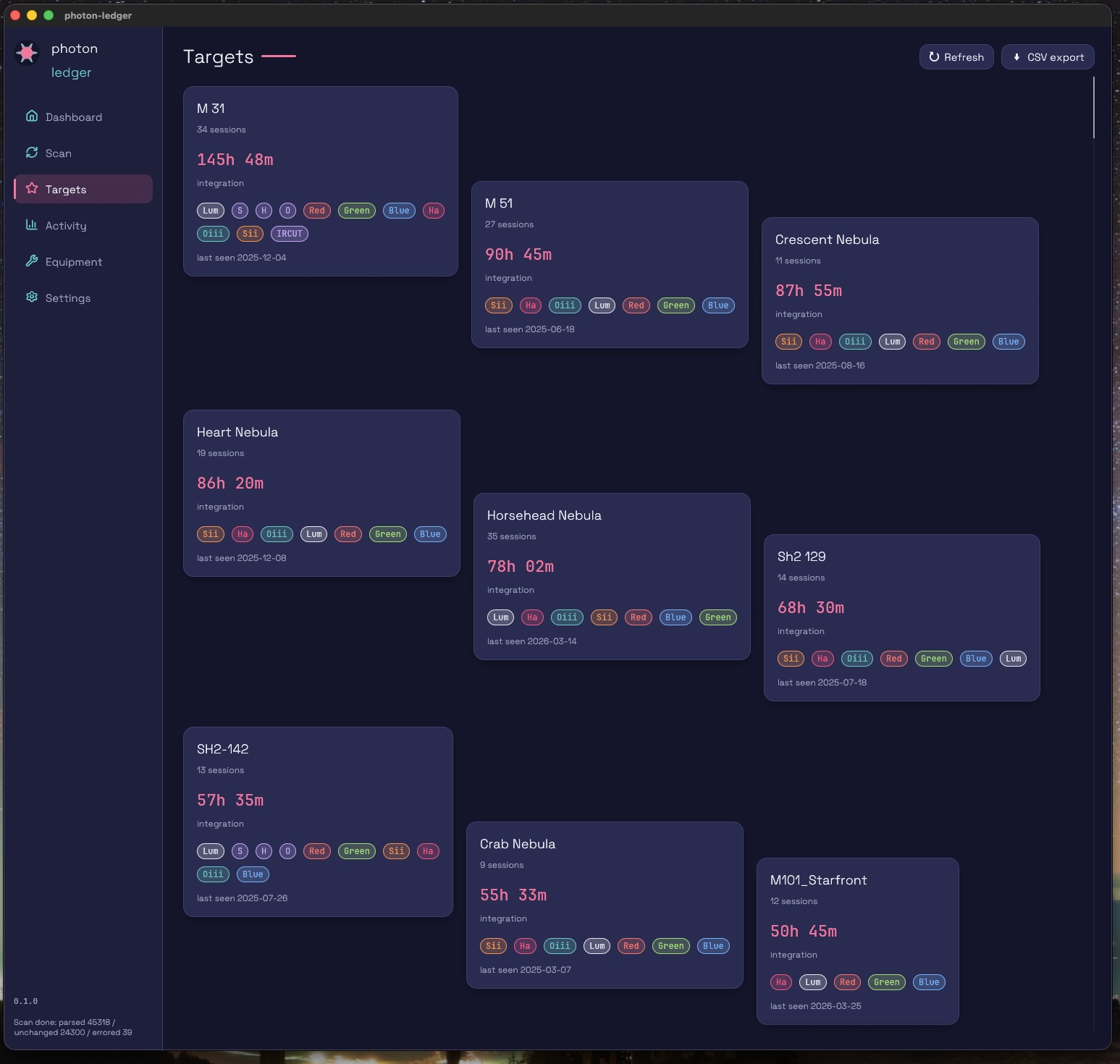
Drill into every object: filter breakdown, session count, total exposure, equipment used.
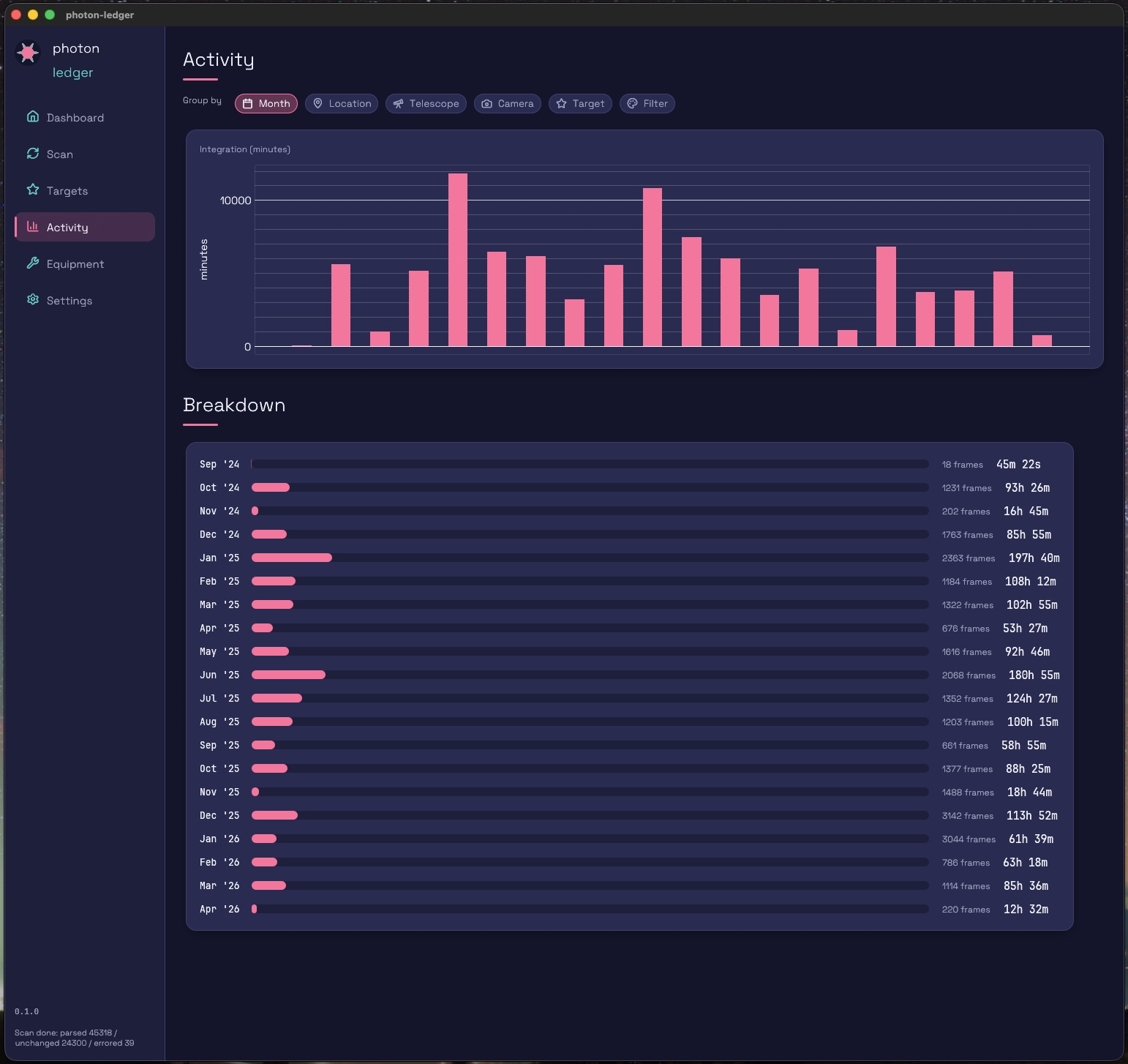
Group integration time by month, telescope, camera, target, filter, or location.
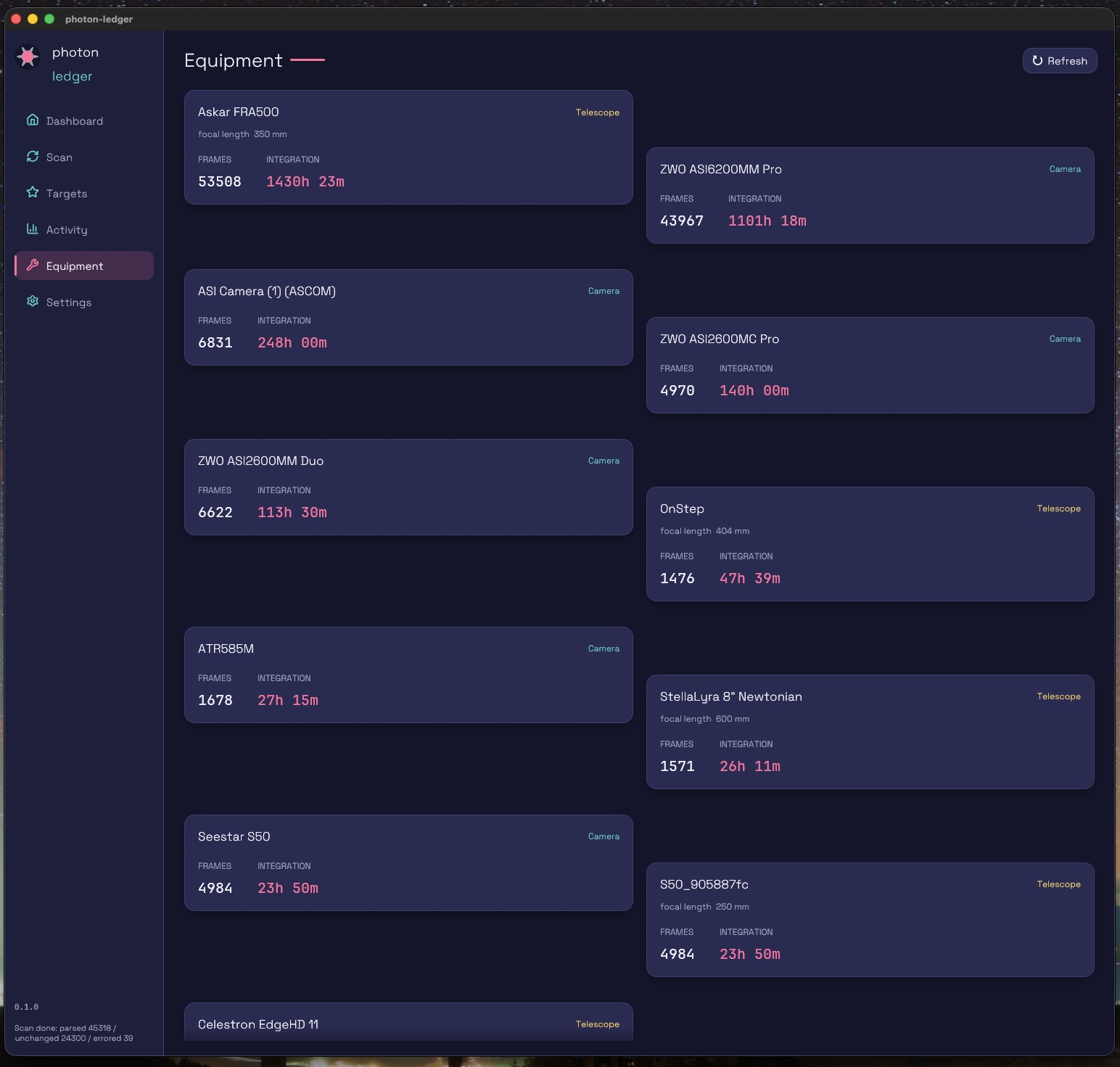
Discover which scope you're actually using. Per-rig hours and per-filter histograms.
SQLite by default. PostgreSQL on Pro. Your data, your machine.
How it works
Point Photon Ledger at the root of your imaging archive. Date-first or target-first layouts both work.
Headers are parsed in parallel. A typical 60,000-frame archive indexes in a few minutes.
Open Dashboard, Activity, Equipment, Targets — answer the questions you've never had answers to.
Pricing
Free indexes up to 5,000 frames on SQLite — enough for most beginner archives. Pro removes the cap, adds a PostgreSQL backend, CSV export, and every future feature, for a one-time $39.
Stay in the loop
One email when v1.0 ships, occasional release notes after. No drip campaigns, no upsells.
FAQ
No. Scanning is fully local. The only network traffic is an optional weekly license recheck which sends a license ID and an anonymous machine fingerprint — never any scan data.
No. Only FITS headers are parsed. Your image files are never opened past the header bytes.
Both date-first (archive/2024-08-13/Light/M81/*.fit) and target-first (archive/M81/2024-08-13/LIGHT/*.fits) layouts. Details.
Works fine over SMB/NFS. The bottleneck is small-file metadata reads, not bandwidth. Expect roughly 200–500 frames/second on a typical 1 GbE NAS.